
Ice-O-Matic Modular Nugget Ice Machines
(1 products)
- Featured
- Most relevant
- Best selling
- Alphabetically, A-Z
- Alphabetically, Z-A
- Price, low to high
- Price, high to low
- Date, old to new
- Date, new to old
-


Ice-O-Matic
Ice-O-Matic GEM2006W Pearl Ice® Maker Soft Chewable Ice Crystals
$11,192.00$13,649.00Unit price /UnavailableFree Shipping
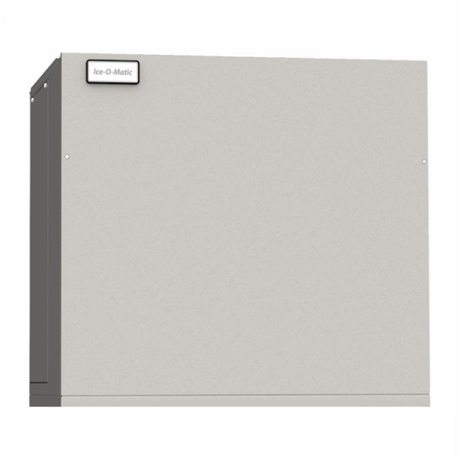

Ice-O-Matic Pearl ice maker systems
Built for high-volume commercial service, an Ice-O-Matic Pearl ice maker produces soft, chewable nugget-style ice for beverages, healthcare, hospitality, and workplace use. This modular collection includes air-, water-, and remote-cooled heads with published maximum outputs ranging from approximately 508 to 2,225 pounds per day.
Condenser options
- Each Pearl ice maker is a modular head without built-in storage, allowing production and storage capacities to be sized separately.
- The air-cooled GEM0650A uses a self-contained condenser and requires sufficient ventilation for discharged heat.
- Water-cooled models include the GEM0450W , GEM0650W , GEM0956W , and GEM2006W , covering lower-, mid-, and high-output applications.
- Remote-cooled models include the GEM0650R , GEM0956R , GEM1306R , and GEM2006R . These configurations move condenser heat and fan noise away from the ice-making area.
Applications
- Restaurants, cafés, bars, and beverage programs serving soft, chewable ice.
- Healthcare, hospitality, and workplace settings where a softer ice texture is preferred.
- High-volume operations that need a commercial Pearl ice maker with separately sized production and storage.
- Facilities comparing air-cooled, water-cooled, and remote-cooled condenser configurations.
System requirements
- Size production for peak demand, not an average day. Include additional capacity for rush periods, warmer operating conditions, and reasonable future growth.
- Match the machine with a compatible bin or dispenser and any required adapter or top kit. Confirm support for the machine’s dimensions, ice-drop opening, production rate, and required peak storage.
- Provide unobstructed airflow and the model-specific clearances required for the air-cooled GEM0650A.
- Plan for a separate condenser-water supply and drain when using a water-cooled model. Review local water-use rules and projected utility costs before ordering.
- Confirm the approved condenser, refrigerant line set, routing limits, electrical work, and qualified installation required for a remote-cooled model.
- Verify voltage, phase, water pressure, drainage, dimensions, delivery access, and service clearances against the exact product page and current Ice-O-Matic specification sheet .
- Plan filtration and maintenance before installation. Standard filtration may reduce sediment and unwanted tastes or odors, but it doesn’t necessarily soften hard water. Follow the model manual for approved cleaning and sanitizing procedures.
Still narrowing the setup? Use our commercial ice machine guide to compare production and condenser types. Review our commercial ice bin guide for storage sizing and compatibility.
If you need a compact unit with built-in storage, browse Ice-O-Matic undercounter nugget ice makers . You can also compare other brands and formats in our commercial nugget-style ice maker collection .
Ice-O-Matic Pearl ice maker FAQs
How is Pearl Ice made?
−
Pearl Ice is made by freezing water into crystals inside a refrigerated vertical evaporator. A rotating auger pushes the crystals upward, and a breaker compresses them before the finished soft, chewable nuggets enter a compatible bin or dispenser.
Why is pebble ice better than regular ice?
+
Pebble ice is better when chewability and quick beverage chilling are priorities. It works well in fountain drinks, iced coffee, smoothies, and healthcare hydration. It isn’t universally better because traditional cubes generally melt more slowly and may suit cocktails or lower-dilution service more effectively.
Do ice makers use a lot of electricity?
+
They can, but electricity use varies by production capacity, condenser type, efficiency, and operating conditions. Review the exact model’s energy-consumption data, not voltage alone, when estimating costs. Hot ambient air and warm incoming water may also reduce efficiency and daily output.
Do ice makers use a lot of water?
+
They can, especially water-cooled models. Every machine uses potable water to make ice, but a water-cooled unit also consumes water to remove condenser heat. It generally uses more water than a comparable air- or remote-cooled machine.
Do Ice-O-Matic ice makers need maintenance?
+
Yes. Ice-O-Matic recommends cleaning and sanitizing its commercial ice machines at least every six months. Water quality, scale, yeast, reverse-osmosis water, and operating conditions may require more frequent service. Regular filter, drain, condenser, sensor, and food-zone care helps protect ice quality and production. Consult Ice-O-Matic service and support for current manuals and qualified service resources.