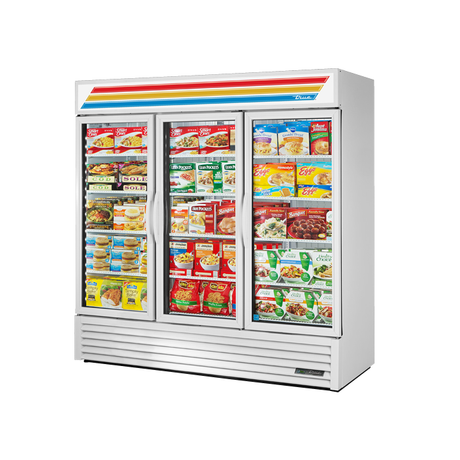
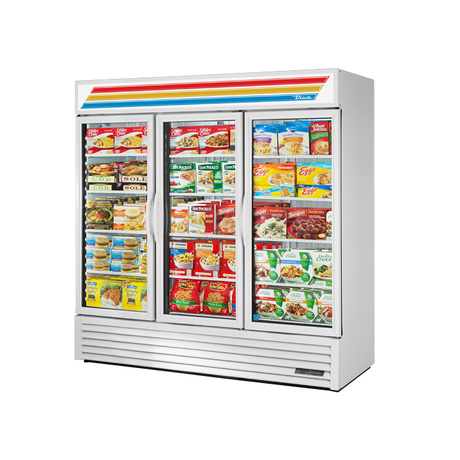
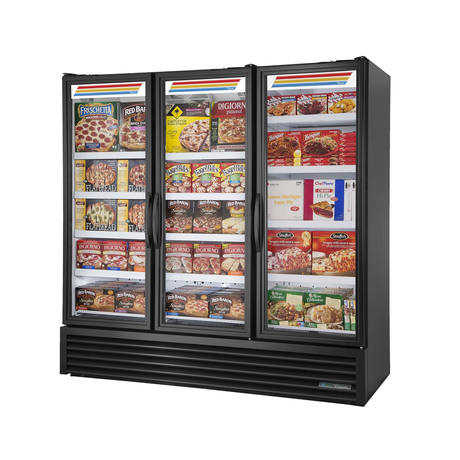
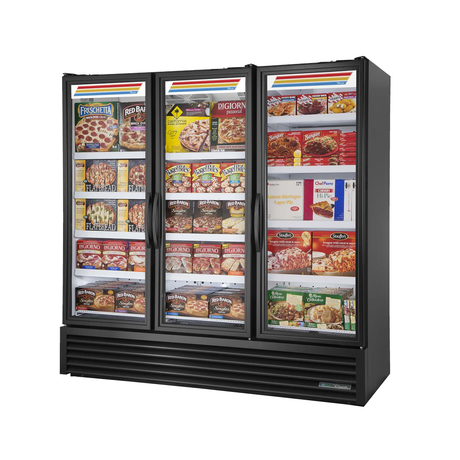
True 3 door glass freezer models
Shop True 3 door glass freezer models for displaying ice cream, packaged frozen foods, and other frozen products. Compare black and white GDM-72F and FLM-81F models by cabinet dimensions, glass construction, shelving layout, product access, and merchandising needs.
Features and differences
- Both model families provide three self-closing glass swing doors and 12 adjustable shelves.
- GDM-72F models use triple-pane thermal-insulated glass doors and heavy-duty PVC-coated wire shelves.
- FLM-81F models use full-length, double-pane thermal-insulated glass doors and solid cantilever shelves that tilt up to 15 degrees.
- LED interior lighting improves product visibility throughout the cabinet.
- Self-contained, bottom-mounted R290 refrigeration is designed to maintain a cabinet temperature of -10°F.
Retail applications
- Convenience stores, supermarkets, cafeterias, and other customer-facing frozen-food displays.
- High-capacity merchandising of ice cream and packaged frozen foods.
- Retail operations that need three display sections in one commercial freezer cabinet.
- Businesses comparing a narrower wire-shelf cabinet with a wider, presentation-focused cantilever-shelf layout.
Site requirements
- Use a GDM-72F model for its narrower cabinet, triple-pane doors, and adjustable wire shelves.
- Use an FLM-81F model for its wider, full-length cabinet, double-pane doors, and tilting cantilever shelves.
- Don’t treat the two model families as interchangeable. Their cabinet dimensions, glass construction, shelving systems, and approved product applications differ.
- Confirm the exact width, depth, height, operating weight, floor-support requirements, front clearance, and delivery path before ordering.
- Allow enough room for all three swing doors to open fully without obstructing customer or employee traffic.
- Provide a 115V, 20-amp dedicated circuit and a NEMA 5-20R receptacle for the unit’s NEMA 5-20P plug.
- Maintain the ventilation and service clearances specified for the exact model.
- Match the cabinet to the intended products. The GDM-72F is listed for storing or displaying packaged or bottled products, while the FLM-81F is NSF/ANSI Standard 7 compliant for open food products.
Need refrigerated display rather than frozen storage? Browse our True 3-section glass door merchandising refrigerators.
Explore the broader True Refrigeration collection for other commercial freezer, refrigerator, and merchandiser formats.
3 door glass freezer FAQs
What is a 3 door glass freezer?
−
A 3 door glass freezer is a commercial display freezer with three transparent doors that let customers and staff view frozen products without opening the cabinet. The True models in this collection use self-closing swing doors and are designed to maintain a cabinet temperature of -10°F.
Who makes True freezers?
+
Which True three-door glass freezer is best?
+
The GDM-72F fits operations needing a 78⅛-inch-wide cabinet, triple-pane glass doors, and adjustable PVC-coated wire shelves. The FLM-81F fits operations needing an 80¾-inch-wide cabinet, full-length double-pane glass doors, and cantilever shelves that tilt up to 15 degrees. Both are designed to maintain -10°F, so the stronger fit depends on available space, intended products, and preferred shelf layout.
Which is better, a glass-door or solid-door freezer?
+
A glass-door freezer is generally better for customer-facing merchandising and quick product identification. A solid-door freezer is generally better for back-of-house storage where product visibility isn’t necessary. The stronger format depends on the operation’s priority: display visibility or concealed storage.
What are the disadvantages of glass-door freezers?
+
Glass doors show fingerprints and smudges, so they require regular cleaning. They also expose the cabinet contents, which may not suit back-of-house storage, and swing-door models need enough front clearance for the doors to open fully.