
- Shop with confidence knowing you’re getting genuine commercial-grade equipment.
- Save more with our unbeatable prices and exclusive deals.
- Rely on experts for fast, friendly support; experts in front of house, back of house and everything in between.

FREE Delivery to:
- Shop with confidence knowing you’re getting genuine commercial-grade equipment.
- Save more with our unbeatable prices and exclusive deals.
- Rely on experts for fast, friendly support; experts in front of house, back of house and everything in between.
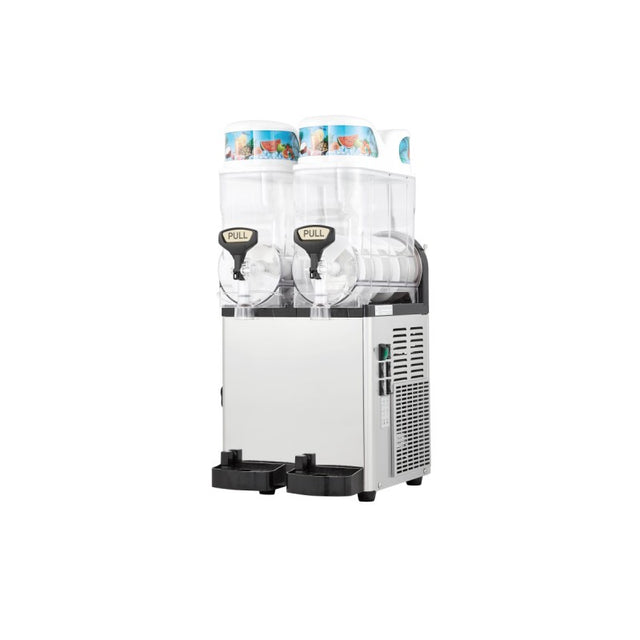
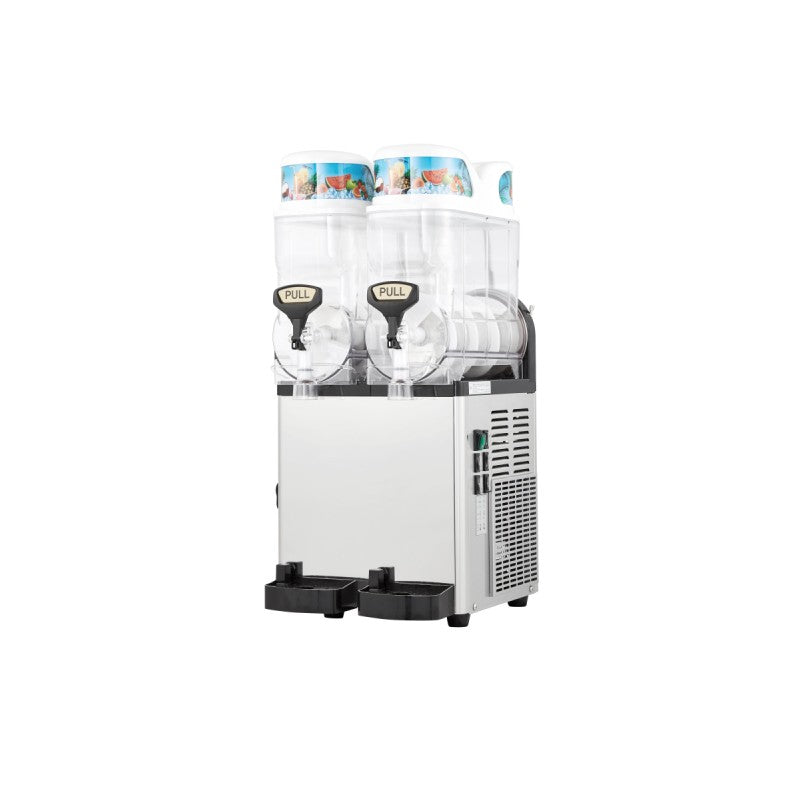
Icetro SSM-280 Slush Machine/Frozen Beverage Dispenser 15"W (2) 3.2-gallon Transparent Bowls
| Manufacturer | Icetro |
|---|---|
| Model Number | SSM-280 |
| Manufacturer Part # | SSM-280 |
| Style | Manual Fill / Standard Pourover |
| Bowl Qty | Double |
| Height | 35.4" |
| Depth | 18.5" |
| Weight | 137.8 lbs |
| CE | Yes |
| UL | Yes |
| cETLus | Yes |
| ETL-Sanitation | Yes |

About this item
Product Details
Product Details
Put two colorful frozen drinks on display without giving up a wide section of counter space.
The Icetro SSM-280 pairs two clear 3.2-gallon bowls with a compact 15.6-inch-wide cabinet, giving cafés, bars, restaurants, concessions, and event venues an attractive way to serve two slush flavors, frozen cocktails, no-pulp fruit drinks, or other compatible frozen beverages. Four viscosity settings help operators refine the finished texture for an approved recipe.
Order this Icetro slush machine from IceMachinesPlus with qualifying free shipping and the 30-Day Price Match Guarantee. Call 1-877-900-4423 for help reviewing availability, electrical service, counter space, ventilation, and the optional autofill configuration before checkout.
The standard SSM-280 is a manual-fill frozen beverage dispenser. It doesn’t need a permanent water connection unless it’s paired with the optional SMA-AF280 autofill kit and installed according to the manufacturer’s instructions. That simplifies placement, but successful operation still depends on the recipe, room temperature, ventilation, and cleaning routine.
| Check | What to confirm |
|---|---|
| Menu | Plan two compatible frozen beverage flavors that can be prepared, replenished, and cleaned efficiently. |
| Mix | Maintain a finished concentration of 13 to 15 Brix. Too little sugar can freeze the mixture too hard, while too much can prevent proper freezing. |
| Alcohol | Keep alcohol below 20% of the finished mixture. Icetro recommends 8% or less with a 13-Brix recipe. |
| Capacity | Each bowl is rated for 3.2 gallons, but Icetro says the mix typically occupies about 75% of rated capacity. Plan on approximately 2.4 gallons per bowl, or 4.8 gallons total, during normal operation. |
| Freeze | Under favorable conditions, a nonalcoholic mix may freeze in about 30 minutes. For conservative planning, allow 50 to 70 minutes, approximately 60 minutes at 90°F, or up to 80 minutes at 100°F. |
| Site | Install the machine indoors in an environment between 32°F and 100°F, with approximately 6 to 8 inches of ventilation clearance around the unit. |
| Power | Provide 115V, single-phase service, a NEMA 5-15P connection, and a circuit meeting the manufacturer’s minimum 15-amp requirement. |
| Care | Rinse and sanitize the applicable components daily, perform a deeper cleaning weekly, and replace recommended wear parts every six months. |
| Warranty | Manufacturer coverage includes one year on parts and labor and five years on compressor parts only, subject to Icetro’s current warranty terms. |
Start with the recipe, not the viscosity adjustment.
A commercial slush machine relies on the finished mixture’s sugar and alcohol content to freeze correctly. Icetro specifies a range of 13 to 15 Brix. A mix below that range can freeze too firmly, overload the gear motor, and damage the machine. Excess sugar can leave the drink thin or completely liquid.
Regular soft drinks and compatible commercial slush concentrates may work when the finished recipe falls within the required Brix range. Diet and sugar-free drinks generally don’t contain enough sugar to produce the intended texture and shouldn’t be used as substitutes for an approved mix.
Frozen cocktails require even tighter control because alcohol lowers the freezing point. Icetro states that alcohol must remain below 20% of the complete mixture and recommends 8% or less when the recipe measures 13 Brix. Account for every ingredient, including liquor, concentrates, syrups, fruit ingredients, and water. Review Icetro’s slush-machine guidance and test each finished recipe before adding it to the menu.
Build realistic freeze time into service.
Icetro estimates that a properly prepared nonalcoholic mixture can freeze in about 30 minutes under normal conditions. Its service guidance provides a more conservative range of 50 to 70 minutes based on ambient temperature, with approximately 60 minutes listed at 90°F and 80 minutes at 100°F. Alcoholic recipes can also require additional time.
Prechill the mix below 68°F before loading it to support faster pull-down and recovery. Warm product, excessive alcohol, incorrect Brix, restricted airflow, and aggressive refilling during a rush can all delay freezing. If rapid recovery is essential, test the intended recipes and batch sizes under the site’s actual operating conditions before launch.
Icetro rates each bowl at 3.2 gallons, producing 6.4 gallons of total published capacity. The manufacturer notes that mix typically occupies about 75% of that capacity, so practical planning should be based on roughly 2.4 gallons per bowl. This working volume leaves room for proper product circulation and gives operators a more realistic basis for estimating servings and refill frequency.
Protect the refrigeration system with proper placement.
The Icetro SSM-280 uses a 0.85-horsepower compressor, two 67-watt gear motors, and 1,020 watts of total rated power. It draws 10 amps and requires a minimum 15-amp circuit. Don’t place it on a shared circuit already carrying other high-demand appliances.
Install the machine indoors on a level counter capable of supporting its 114-pound product weight plus the loaded beverage mix. Maintain approximately 6 to 8 inches of clearance around the cabinet, and keep the condenser area free of grease, dust, packaging, and other obstructions.
Avoid positioning the unit beside ovens, fryers, grills, or direct sunlight. Excess heat can extend freeze time and increase refrigeration strain. The installation area also needs enough working room to remove the bowls, drip tray, and other food-contact parts without moving or damaging the machine.
Make cleaning part of the closing routine.
Clear bowls help merchandise the drinks, but they also make residue, color transfer, and inconsistent sanitation visible. Icetro recommends a daily rinse and sanitation and a weekly deep cleaning, especially when changing mixes. Follow the current manual and local food-safety requirements for draining, disassembly, approved chemicals, lubrication, reassembly, and restart.
Icetro also recommends replacing wearable parts every six months. Inspect the machine sooner if you notice leaks, unusual noise, poor product movement, inconsistent texture, or longer freeze times.
The available refrigeration mode can keep compatible product chilled during a temporary pause, but the mixture returns to a liquid state. Freeze mode must be reactivated before serving slush again. Refrigeration mode doesn’t replace cleaning, sanitation, temperature monitoring, or local rules governing overnight product storage.
Icetro SSM-280 FAQs
The Icetro SSM-280 is a practical fit when two-flavor visibility, compact placement, and manual-fill operation match the beverage program. Its best results come from controlled recipes, prechilled mix, sufficient ventilation, and consistent sanitation.
Review the official SSM-280 product information before installation, or compare other Icetro frozen beverage dispensers if another bowl count or capacity better fits anticipated demand.
Certifications

ETL Sanitation
The item meets or exceeds the sanitation standards set by Edison Testing Laboratories (ETL).

ETL US & Canada Listed
The item meets or exceeds ETL safety standards as well as those set by Canada and the U.S.

CE Listed
The item has been tested by the Conformité Européenne (CE) for sanitation hazard standards and meets or exceeds expectations.

UL Listed
The item has been tested by Underwriters Laboratories (UL) for sanitation hazard standards and meets or exceeds expectations.